Is marijuana really medicine? I’m not arguing against the potential for marijuana to treat illness, nor do I mean to imply that marijuana is simply a recreational drug that has no place in medicine. Instead, I simply wish to point out how the “medical” label, I feel, has been misused and co-opted in a way that reveals what “medicine” really is (and is not).
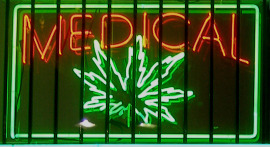 Let me state, for the record, that I have no position on medical marijuana. I practice in California, a state in which it is legal to use marijuana for medicinal purposes. Even though I do not prescribe it, I do not judge those who do, nor those who use it. I agree that it can be helpful in a wide range of illnesses– sometimes even in the place of established medicines. It is unfortunate that controlled studies on THC and other cannabinoid compounds– studies that could lead to new therapies– have not been performed.
Medical care usually follows a well-established outline: a patient with a complaint undergoes an examination by a provider; a diagnosis is determined; potential courses of treatment are evaluated; and the optimal treatment is prescribed. Afterward, the patient follows up with the provider to determine the efficacy of treatment, any potential side effects, and interactions with other medications or therapies. The frequency of follow-up is determined by the severity of the illness, and therapy is discontinued after it is no longer necessary, or becomes detrimental to the patient.
Unfortunately, none of this describes how medical marijuana is practiced. Any patient can undergo an examination; the vast majority of such patients have already been using marijuana and explain that they find it helpful, and the provider issues a card stating that they “advise” the use of medical marijuana. Not a prescription, but a card– which permits him or her to buy virtually any amount, of any type of cannabis desired. Follow-up visits are typically yearly, not to evalaute response to treatment, but to issue a new card.
 As a psychiatrist, I frequently see patients who tell me they have been prescribed marijuana for “anxiety” or “depression.” Often, my evaluation confirms that they do indeed suffer from, say, a clinically relevant anxiety disorder or major depression. However, when I know they are using another chemical to treat their symptoms (whether cannabis, alcohol, or a medication prescribed by another physician) it becomes my responsibility to determine whether it will interfere with treatment. In most cases, it also makes sense to collaborate with the other provider to develop a treatment plan, much as a cardiologist might collaborate with a family physician to manage a patient’s coronary artery disease. [Sometimes the treatment plan might be to continue marijuana because I believe psychiatric meds simply won’t have any effect.]
 But efforts to communicate with marijuana prescribers often fail (and when I have been successful in communicating with such a prescriber, they’re usually surprised that I made the effort!). Similarly, if I suggest to a patient that he or she consult with the marijuana prescriber to find a strain, or a delivery method, or a dosing interval, that would provide the best symptom relief, or the least interaction with conventional medications– they often react with shock. “But I only see him once a year,” is the answer I receive.
Often I say to myself something like, “well, marijuana helps him, so I’ll let him continue using it; I’ll just ‘work around it’ unless it becomes a problem.” The patient usually tells me that he wants to continue using marijuana “as needed,” but he also wishes to continue in treatment with me, taking the medications I prescribe and following through with any treatment I suggest.
It leads to an uncomfortable compartmentalization of care, in which I feel that I’m practicing “real” medicine, while simultaneously condoning his use of another substance, even though neither of us knows the true chemical content of this substance, doses might vary from day to day, and some might be shared with friends. To top it all off, patients frequently report a greater response to marijuana than what I prescribe, and yet I ignore it? This is not the way I was trained to practice medicine, and yet I do it almost every day.
The approval of “medical marijuana” has been, I believe, a successful campaign by proponents of marijuana legalization to take advantage of the fragmented and confused health care system to create a de facto social sanction of marijuana use, rather than (a) introducing it as a true “medicine” through the proper and accepted channels (clinical trials, FDA approval, etc) or (b) decriminalizing it into a legal drug, much like alcohol. I can see the arguments in favor of either approach, but the “medical” label unfortunately undermines what we actually try to do in medicine.
On the other hand, if it works, maybe we ought to take a closer look at what we actually are trying to do in medicine. If medicine worked all the time, there would be no need for medical marijuana, would there?


 Posted by stevebMD


 Thought Broadcast