What Psychiatrists Treat and Why

February 20, 2011

Do we treat diseases or symptoms in psychiatry?  While this question might sound philosophical in nature, it’s actually a very practical one in terms of treatment strategies we espouse, medications and other interventions we employ, and, of course, how we pay for mental health care.  It’s also a question that lies at the heart of what psychiatry is all about.

Anyone who has been to medical school or who has watched an episode of House knows that a disease has (a) an underlying pathology, often hidden to the naked eye but which is shared by all patients with that diagnosis, and (b) signs and symptoms, which are readily apparent upon exam but which may differ in subtle ways from patient to patient.  An expert physician performing a comprehensive examination can often make a diagnosis simply on the basis of signs and symptoms.  In some cases, more sophisticated tools (lab tests, scans, etc) are required to confirm the diagnosis.  In the end, once a diagnosis is obtained, treatment can commence.

(To be sure, sometimes a diagnosis is not apparent, and a provisional or “rule-out” diagnosis is given.  The doctor may initiate treatment on an empiric basis but will refine the diagnosis on the basis of future observations, responses to treatment, and/or disease course.)

In psychiatry, which is recognized as a branch of medicine and (should) subscribe to the same principles of diagnosis and treatment, the expectations are the same.  There are a number of diseases (or disorders) listed in the DSM-IV, each theoretically with its own underlying pathology and natural history, and each recognizable by a set of signs and symptoms.  A careful psychiatric evaluation and mental status exam will reveal the true diagnosis and suggest a treatment plan to the clinician.

It sounds simple, but it doesn’t always work out this way.  Psychiatrists may disagree about a given diagnosis, or make diagnoses based on “soft” signs.  Moreover, there are very few biological or biochemical tests to “rule in” a psychiatric diagnosis.  As a result, treatment plans for psychiatric patients often include multiple approaches that don’t make sense;  for example, using an antidepressant to treat bipolar disorder, or using antipsychotics to treat anxiety or insomnia symptoms in major depression.

The psychiatrist Nassir Ghaemi at Tufts has written about this before (click here for a very accessible version of his argument and here [registration required] for a more recent dialogue in which he argues his point further).  Ghaemi argues in favor of what he calls “Hippocratic psychopharmacology.” Specifically, we should understand and respect the normal course of a disease before initiating treatment.  He also emphasizes that we not treat symptoms, but rather the disease (this is also known as Osler’s Rule, in honor of Sir William Osler, the “founder of modern medicine”).  For example, Ghaemi makes a fairly compelling argument that bipolar disorder should be treated with a mood stabilizer alone, and not with an antidepressant, or an antipsychotic, or a sedative, because those drugs treat symptoms which should resolve as a person goes through the natural course of the disease.  In other words, we miss the diagnostic forest by focusing on the symptomatic trees.

The problem is, this is a compelling argument only if there is such a diagnosis as “bipolar disorder.”  Or, to be more specific, a clear, unitary entity with a distinct pathophysiological basis that gives rise to the symptoms that we see as mania and depression, and which all “bipolar” patients share.  And I don’t believe this assumption has been borne out.

My personal bias is that bipolar disorder does exist.  So do major depression, schizophrenia, panic disorder, anorexia nervosa, ADHD, and (almost) all the other diagnoses listed in the DSM-IV.  And a deeper understanding of the pathophysiology of each might help us to develop targeted treatments that will be far more effective than what have now.  But we’re not there yet.  In the case of bipolar disorder, lithium is a very effective drug, but it doesn’t work in everyone with “bipolar.”  Why not?  Perhaps “bipolar disorder” is actually several different disorders.  Not just formes frustes of the same condition but separate entities altogether, with entirely different pathophysiologies which might appear roughly the same on the outside (sort of like obesity or alcoholism).  Of course, there are also many diagnosed with “bipolar” who might really have no pathology at all– so it is no surprise that they don’t respond to a mood stabilizer (I won’t elaborate on this possibility here, maybe some other time).
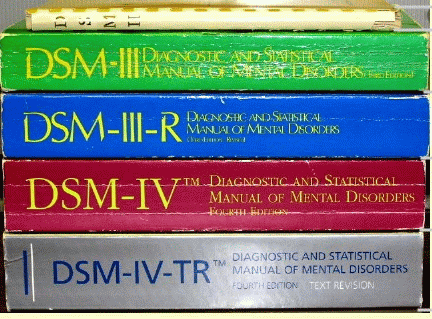
The committee in charge of writing the DSM-5 is almost certainly facing this conundrum.  One of the “holy grails” of 21st century psychiatry (which I wrote about here) is to identify biochemical or genetic markers that predict or diagnose psychiatric disease, and it was hoped that the next version of the DSM would include these markers amongst its diagnostic criteria.   Unfortunately, this isn’t happening, at least not with DSM-5.  In fact, what we’re likely to get is a reshuffling and expansion of diagnostic criteria.  Which just makes matters worse:  how can we follow Osler’s advice to treat the disease and not the symptom when the definition of disease will change with the publication of a new handbook?

As a practicing psychiatrist, I’d love to be able to make a sound and accurate diagnosis and to use this diagnosis to inform my treatment, practicing in the true Hippocratic tradition and following Osler’s Rule, which has benefited my colleagues in other fields of medicine.  I also recognize that this approach would respect Dr Ghaemi’s attempt at bringing some order and sensibility to psychiatric practice.  Unfortunately, this is hard to do because (a) we still don’t know the underlying cause(s) of psychiatric disorders, and (b) restricting myself to pathophysiology and diagnosis means ignoring the psychosocial and environmental factors that are (in many ways) even more important to patients than what “disease” they have.

It has frequently been said that medicine is an art, not a science, and psychiatry is probably the best example of this truism.  Let’s not stop searching for the biological basis of mental illness, but also be aware that it may not be easy to find.  Until then, whether we treat “diagnoses” or “symptoms” is a matter of style.  Yes, the insurance company wants a diagnosis in order to provide reimbursement, but the patient wants management of his or her symptoms in order to live a more satisfying life.


When Does Treatment End?

February 5, 2011

When is it okay to discontinue psychiatric treatment?  Is a patient ever “cured” of a psychiatric illness?  It sounds like a straightforward question, but it’s also one that is rarely asked, at least by psychiatrists.

To be honest, I hadn’t really given it much thought myself, until recently.  A large proportion of my patients actually improve with treatment (thank goodness!), and sometimes I ask myself, “Does he need to see me anymore?”  And isn’t that the goal of medicine?  To cure someone?  To rehabilitate him?  To “fix” him?  To be able to say to someone, “Congratulations, you’re cured!”  Sure, I can decrease the frequency of his office visits because he seems “stable,” but why can’t I let go completely?

We don’t do that often enough in psychiatry, and I can’t figure out why.  The “bio-psycho-social” model of psychiatry, the three-tiered foundation on which modern psychiatric care is built (although not immune to criticism), incorporates psychological and social components, two factors which are often amenable to change, especially with a motivated patient.  Do we not believe that we can cause biological change, too?  And perhaps reach the point where we’ve corrected whatever biological defect we identified, and let our patient go forth and be happy, in the absence of psychiatric medication?  Or do we honestly believe that the biological defect is so tenacious, so permanent, that we must continue to medicate indefinitely?

To be sure, there are cases of chronic mental illness in which ongoing, life-long medication management is necessary to guarantee the safety and well-being of a patient.  There are also cases in which short-term treatment is the rule.  In my practice, for instance, I do not initiate treatment with a medication like a benzodiazepine or Suboxone without some discussion of how and when the medication will be discontinued—sort of an “exit strategy,” so to speak.

But there are countless other patients who reach a sort of therapeutic “plateau”:  they feel overwhelmingly better than they did when they first presented for care, they’ve “responded to treatment,” and while they may not have eliminated 100% of their symptoms or solved all of their presenting problems, they feel well enough that they can be trusted to move onward.  Is another six months on antidepressants really going to make a difference in this patient?  Is a psychostimulant really necessary now that this patient has developed new organization and study skills?  Has this patient adopted new ways to cope with his aggression or obsessiveness such that medications are no longer necessary?  These are the questions that we really ought to be asking more frequently than we do.

Most psychopharmacologists would argue that therapeutic success is not only the result of medication management, but, significantly, the justification for continuing with medication management. In other words, a patient achieves remission from depression because of the medication, not because of the steps he has taken to improve his lifestyle, his self-esteem, his relationships, etc.  (Or, to be more accurate, the medication permits him to make—and maintain—the lifestyle changes that helped to emerge from his illness.)  Stopping medication and discharging a patient is a breach of the therapeutic contract.  Aren’t we taught that relapse is a part of this disease?  Yes, it is, for some patients.  But how do we determine which ones?

Psychologists and psychotherapists receive extensive training in ending the therapeutic relationship with a client —a process they refer to as “termination.” A key component is determining whether a client is appropriate for termination, and whether the original treatment goals have been met.  The process of termination celebrates the success of the therapy and, symbolically and practically, awards the client with a new identity, granting him or her with the newfound ability—and responsibility—to face obstacles that initially seemed insurmountable.  Why we don’t challenge ourselves to do the same thing in psychiatry is a mystery to me.

The American Psychiatric Association recently published its revised treatment guidelines for major depression.  In the entire 100-page document, the section on “Discontinuation” is only one paragraph, on page 20.  It says nothing about when to discontinue, how to discontinue, or which patients are the best candidates for discontinuation.  Instead, it simply advises the doctor to inform the patient “of the potential for a depressive relapse and [establishing] a plan for seeking treatment in the event of recurrent symptoms.”  Good advice, but it says nothing about what constitutes success.

Perhaps we continue care indefinitely because we believe lifelong pharmacotherapy is essential to correct the abnormality that exists in the brain.  Unfortunately, with few exceptions, science really hasn’t been able to make that connection.  Perhaps we continue care because we don’t believe in our patients’ ability to maintain the gains they have achieved without our help.  This, too, is unfortunate, as it inherently denies the patient’s own capacity for improvement and change.

Whatever the reason, it’s time for our field to think seriously about how we “end” care.  Not to admit failure—on the contrary, to refocus our efforts on achieving a successful outcome for the patient while preserving the patient’s autonomy and independence whenever possible.  It’s respectful, responsible, and the right thing to do.


Kids gaming pathologically

January 19, 2011

Today’s New York Times “Well” blog shares the results of a recent study suggesting that video games may contribute to depression in teenagers.  Briefly, the study found that grade-school and middle-school students who were “more impulsive and less comfortable with other children” spent more time playing video games than other teens.  Two years later, these same students were more likely to suffer from depression, anxiety, and social phobias.  The authors are careful to say that there’s no evidence the games caused depression, but there’s a strong correlation.

I pulled up the original article, and the authors’ objectives were to “measure the prevalence…of pathological video gaming, …to identify risk and protective factors, …and to identify outcomes for individuals who become pathological gamers.”  They didn’t use the word “addiction” in their paper (well, actually, they did, but they put it in quotes), but of course the take-home message from the NY Times story is quite clear:  kids can be addicted to video game playing, and this could lead to depression.

As with any extreme activity, I would not be surprised to learn that there are some kids who play games compulsively, who sacrifice food, sleep, hygiene, and other responsibilities for long periods of time.  But to use words like ‘addiction’– or even the less loaded and more clinical-sounding ‘pathological gaming’– risks labeling a potentially harmless behavior as a problem, and may have little to do with the underlying motives.

What’s so pathological, anyway, about pathological gaming?  Is the kid who plays video games for 30 hours a week playing more “pathologically” than the one who plays for only 10?  Does the kid with lots of friends, who gets plenty of fresh air, is active in extracurriculars, and has lots of friends face a more promising future than the one who would prefer to sit at home on the XBOX360 and sometimes forgets to do his homework?  Which friends are more valuable in life—the Facebook friends or the “real” friends?  We know the intuitive answer to these questions, but where are the data to back up these assumptions?

The behavior itself is not the most important factor.  I know some “workaholics” who work 80-plus-hour weeks; they are absolutely committed to their work but they also have rich, fulfilling personal lives and are extremely well-adjusted.  I’ve also met some substance abusers who have never been arrested, never lost a job, and who seem to control their use (they often describe themselves as “functional” addicts) but who nonetheless have all the psychological and emotional hallmarks of a hard-core addict and desperately need rehabilitation.


I have no problem with researchers looking at a widespread activity like video game playing and asking whether it is changing how kids socialize, or whether it may affect learning styles or family dynamics.  But when we take an activity that some kids do “a lot” and label it as pathological or an “addiction,” without defining what those terms mean, or asking what benefit these kids might derive from it, we are, at best, imposing our own standards of acceptable behavior on a generation that sees things much differently, or, at worst, creating a whole new generation of addicts that we now must treat.


The Tucson massacre – preventable?

January 12, 2011

Last Saturday’s tragic events in Tucson have called attention to the behavior of Jared Loughner, the perpetrator, as well as the political climate in which this horrific event occurred.  While it is likely too early to determine to what degree, if any, Loughner’s political views may have motivated this unspeakable act, information has come to light regarding his unusual behavior and unorthodox opinions, raising questions regarding his mental state.

Without direct observation of Loughner and his behavior, it would be risky to posit a diagnosis at this time.  Even though details are emerging, I do not yet know whether Loughner had been diagnosed with an illness, or whether he was taking medications.  But if it is determined by forensic experts that Loughner did indeed suffer from a psychiatric illness, one question that is certain to arise is:  Can a person with an illness that gives rise to unconventional views and a potential for violence be forcibly treated, so that events like this can be prevented?

[Before answering this question, two things should be emphasized:  First, mental illness very rarely causes violent behavior; and as a consequence, the function of psychiatric medication is not to prevent violence (indeed, see my earlier post).  Antipsychotic drugs can, however, minimize delusional and paranoid thoughts, and improve a person’s ability to negotiate the difference between reality and fantasy, and some mood stabilizers and antidepressants may lessen impulsivity and aggression, but we cannot assume that medications could have prevented Loughner’s act.]

Several landmark cases addressing this very issue have said no; patients retain the right to refuse treatment.  Patients can, however, be involuntarily committed to a hospital, but only when immediate intervention is required to prevent death or serious harm to themselves or to another person, or to prevent deterioration of the patient’s clinical state.  In California, the relevant section of the law is section 5150 of the Welfare and Institutions Code.  This allows a law enforcement officer or a clinician to involuntarily confine a person to treatment for a 72-hour period.  The criteria for a 5150 hold require the presence of “symptoms of a mental disorder” prior to the hold.  (Thus, self-injurious behavior as a result of alcohol intoxication does not qualify a person for a legal hold.)  All states provide some comparable form of brief involuntary commitment for those suspected of danger to self or others, or grave disability, as a result of a mental illness.

Even after hospital admission, though, patients have the right to refuse medications.  Medications can only be given involuntarily if a court determines, based on evidence presented by doctors, that a patient lacks the capacity to give informed consent (in California, this process is called a Riese hearing).

But what about cases that are less acute?  If Loughner’s behavior arose from a psychotic disorder such as paranoid schizophrenia (and his behavior does indeed have hallmarks of such a diagnosis) but not significant enough to require hospitalization, one might argue that adherence to an antipsychotic regimen may have prevented the extreme behavior we saw on Saturday.

He still could have refused.  A number of court decisions (discussed here) have established and affirmed this right.  Recent exceptions include Kendra’s Law in New York and Laura’s Law in California.  Kendra’s Law, enacted in 1999, allows courts to order seriously mentally ill individuals to accept treatment as a condition for living in the community.  It was originally designed to target those with a history of repeat hospitalizations that resulted from nonadherence to medications.  Patients can be ordered into assisted outpatient treatment if they are “unlikely to survive safely in the community without supervision” and have demonstrated either (a) acts of serious violent behavior toward self or others, or (b) at least two hospitalizations within the last 3 years, resulting from nonadherence to a treatment regimen.  Laura’s Law was signed into law in 2002 in California, although as of 2010 only two California counties have implemented it.  Studies reviewing the effects of these laws have found that patients in assisted outpatient treatment had fewer hospitalizations, fewer arrests and incarcerations, and had were less likely to be homeless or to abuse alcohol or drugs.

If Loughner had made threats of violence while engaged in treatment, another related decision, the Tarasoff duty, could have been invoked.  In the 1976 case of Tarasoff vs Regents of University of California (and a second ruling in 1982), it was determined that a physician or therapist who has reason to believe that a patient may injure or kill someone must warn the potential victim (the 1982 ruling broadened the decision to include the duty to protect, as well).  Thus, if a patient makes a threat against another person—and the clinician perceives it to be credible—he or she must warn the targeted individual, law enforcement, or take any other steps that are “reasonably necessary.”  

Clearly, there is a great deal of uncertainty and latitude in the above cases.  While the Tarasoff duty is clearly designed to prevent danger to others, it may potentially destroy the trust between doctor and patient and therefore hinder treatment; similarly, it is often difficult to determine whether a patient’s threats are credible.  In the case of a patient like Loughner, would antigovernment rhetoric prompt a warning?  What about threats to “politicians” in general?  The clinician’s responsibility is not always clear.

With regard to Kendra’s and Laura’s Laws, the meaning of “survival in the community” can be debated, and it is often arguable whether compliance with medications would prevent hospitalization.  Opponents argue that the best solution is more widespread (and more effective) voluntary outpatient treatment, rather than forced treatment.

As more information on this case comes to light, these issues are certain to be discussed and debated.  We must not rush to judgment, however, regarding motives and explanations for Loughner’s behavior and the
steps we could take (or could have taken) to prevent it.


Medical marijuana and psychiatry

January 9, 2011

Is marijuana really medicine?  I’m not arguing against the potential for marijuana to treat illness, nor do I mean to imply that marijuana is simply a recreational drug that has no place in medicine.  Instead, I simply wish to point out how the “medical” label, I feel, has been misused and co-opted in a way that reveals what “medicine” really is (and is not).

Let me state, for the record, that I have no position on medical marijuana.  I practice in California, a state in which it is legal to use marijuana for medicinal purposes.  Even though I do not prescribe it, I do not judge those who do, nor those who use it.  I agree that it can be helpful in a wide range of illnesses– sometimes even in the place of established medicines.  It is unfortunate that controlled studies on THC and other cannabinoid compounds– studies that could lead to new therapies– have not been performed.

Medical care usually follows a well-established outline: a patient with a complaint undergoes an examination by a provider; a diagnosis is determined; potential courses of treatment are evaluated; and the optimal treatment is prescribed.  Afterward, the patient follows up with the provider to determine the efficacy of treatment, any potential side effects, and interactions with other medications or therapies.  The frequency of follow-up is determined by the severity of the illness, and therapy is discontinued after it is no longer necessary, or becomes detrimental to the patient.

Unfortunately, none of this describes how medical marijuana is practiced.  Any patient can undergo an examination; the vast majority of such patients have already been using marijuana and explain that they find it helpful, and the provider issues a card stating that they “advise” the use of medical marijuana.  Not a prescription, but a card– which permits him or her to buy virtually any amount, of any type of cannabis desired.  Follow-up visits are typically yearly, not to evalaute response to treatment, but to issue a new card.

As a psychiatrist, I frequently see patients who tell me they have been prescribed marijuana for “anxiety” or “depression.”  Often, my evaluation confirms that they do indeed suffer from, say, a clinically relevant anxiety disorder or major depression.  However, when I know they are using another chemical to treat their symptoms (whether cannabis, alcohol, or a medication prescribed by another physician) it becomes my responsibility to determine whether it will interfere with treatment.  In most cases, it also makes sense to collaborate with the other provider to develop a treatment plan, much as a cardiologist might collaborate with a family physician to manage a patient’s coronary artery disease.  [Sometimes the treatment plan might be to continue marijuana because I believe psychiatric meds simply won’t have any effect.]

But efforts to communicate with marijuana prescribers often fail (and when I have been successful in communicating with such a prescriber, they’re usually surprised that I made the effort!).  Similarly, if I suggest to a patient that he or she consult with the marijuana prescriber to find a strain, or a delivery method, or a dosing interval, that would provide the best symptom relief, or the least interaction with conventional medications– they often react with shock.  “But I only see him once a year,” is the answer I receive.

Often I say to myself something like, “well, marijuana helps him, so I’ll let him continue using it; I’ll just ‘work around it’ unless it becomes a problem.”  The patient usually tells me that he wants to continue using marijuana “as needed,” but he also wishes to continue in treatment with me, taking the medications I prescribe and following through with any treatment I suggest.

It leads to an uncomfortable compartmentalization of care, in which I feel that I’m practicing “real” medicine, while simultaneously condoning his use of another substance, even though neither of us knows the true chemical content of this substance, doses might vary from day to day, and some might be shared with friends.  To top it all off, patients frequently report a greater response to marijuana than what I prescribe, and yet I ignore it?  This is not the way I was trained to practice medicine, and yet I do it almost every day.

The approval of “medical marijuana” has been, I believe, a successful campaign by proponents of marijuana legalization to take advantage of the fragmented and confused health care system to create a de facto social sanction of marijuana use, rather than (a) introducing it as a true “medicine” through the proper and accepted channels (clinical trials, FDA approval, etc) or (b) decriminalizing it into a legal drug, much like alcohol.  I can see the arguments in favor of either approach, but the “medical” label unfortunately undermines what we actually try to do in medicine.

On the other hand, if it works, maybe we ought to take a closer look at what we actually are trying to do in medicine.  If medicine worked all the time, there would be no need for medical marijuana, would there?


Violence, crime, and mental illness

January 7, 2011

Are people with mental illness more violent or aggressive, or more likely to commit crimes than those without mental illness?  Two recent papers investigate different aspects of this question.

In the January 2011 issue of Psychiatric Services, Fisher and colleagues investigate data from the Massachusetts Department of Mental Health, and found that people who had been diagnosed with a “severe and persistent psychiatric disorder” were two-thirds more likely than the general population to be arrested within a one-year period.  Arrest rates were significantly higher for all crimes, but particularly high for assault and battery on a police officer, a felony (odds ratio 5.96, or about 6 times more likely), and “crimes against public decency” (odds ratio 4.72).  While the data only reflect arrests (and not convictions, which would be fewer, since some charges were undoubtedly dropped), and say nothing about whether a person was actively involved in treatment at the time of his or her arrest, it does portray the severely mentally ill as more likely to engage with the criminal justice system.

A separate study, published last month in PLOS One, examined reports of medication-related adverse events to the FDA.  The authors looked at 484 drugs and the rates with which they had been associated with “violence-related symptoms.”  All medications had some such symptoms reported, but certain classes of drugs were associated with more frequent violent events than would occur by chance alone.  In particular, varenicline (Chantix) was most frequently associated with reports of violence, with a PRR (proportional reporting ratio) of 18.0.  (This means that the proportion of violent events by patients on Chantix was 18 times greater than the proportion of violent events reported for all other drugs).  Other medications shown to be associated with violent behaivor included antidepressants (average PRR = 8.4) and psychostimulants (average PRR = 6.9).  

It should be pointed out that the authors of the PLOS study have served as expert witnesses in criminal cases involving psychiatric drugs, and work for the Institute for Safe Medication Practices, a nonprofit group dedicated to exposing medication risks.  Furthermore, the reports of adverse events to the FDA may suffer from “attribution error”: when an adverse event like a violent act occurs, we search for possible causes, and medications– particulalry psychiatric meds– are frequent culprits, when in fact there may be no causal relationship.  Nevertheless, the large numbers of events, and the relative consistency within drug classes, should give us reason for concern.

But even with these limitations, these studies unfortunately show that criminal activity may indeed be more common among the mentally ill, and we need to exercise caution when using medications when the risk of aggression is high, to avoid making matters worse.


Sometimes meds are not the answer

January 4, 2011

I wanted to share an article that brought a smile to my face.  Dr Miguel Rivera is my hero of the day!

Under the direction of psychiatrist Dr. Miguel Rivera, caregivers at the Pines have deployed such simple spa comforts as music, massage and calming colors to help reduce agitation. As a result, dosages of antipsychotic medications have dropped to less than half the state average for this most challenging patient population.

I have never worked in a long-term care facility, although I have treated many patients from such places.  I have great respect for those who can work on a sustained basis with people who have progressive neurological or developmental disorders and who cannot adequately report feelings, thoughts, or emotions the way other patients can.

Unfortunately, with few exceptions, when patients are brought to my office from a long-term care setting, the concern is not a disturbance in mood, recurrent psychotic ideation, problematic anxiety, or a need for acute hospitalization for imminent danger to self or others.  Instead, it is because the patient is “causing problems”– maybe yelling in the middle of the night or fighting with a staff member.  Perhaps he refuses to take his medications, or he’s throwing food.  He might wander off from the facility or accuse staff members of stealing from him.

Many chronically disabling conditions, including progressive dementia, can be associated with psychiatric symptoms such as delusional thoughts or agitation.  And it is true that many of our most potent medications can, when used judiciously, treat these symptoms (noting, of course, the black-box warning against using antipsychotics for the treatment of dementia-related psychosis).  However, as with most things in psychiatry, there is a fine line between treating a psychophysiological symptom that causes distress to a patient, and treating a behavioral phenomenon that causes distress to a caregiver.

The most common question I hear from attendants, family members, nursing staff, and others who accompany these patients to my office is, “Can you do something about his [insert troublesome symptom here]?”  And my answer is always the same:  Yes, if you mean you want me to sedate him or calm him with a powerful chemical.  But it’s more important, in my mind, to understand other ways to alleviate his suffering, while preserving his dignity and whatever autonomy he still retains.

It’s an extremely difficult process, but Dr Miguel Rivera seems to have found a solution.  And it didn’t come from the pharmacopoeia, but from his unique ability to listen, to empathize, and to design therapies to appeal to patients’ own unique needs.  It’s a model we all ought to follow.


Bipolar in the eye of the beholder

January 4, 2011


So whom is the joke on here?

I found this video on one of the several blogs I subscribe to.
(Okay, I’ll admit it, I’m a sucker for these Xtranormal videos.)

It seems to be composed from the point of view of the jaded psychiatric consumer patient, disturbed at the fact that her fairly unremarkable complaints are interpreted by her psychiatrist as symptoms of bipolar disorder, and how every problem’s solution seems to be a medication adjustment.

Indeed, most mental health conditions include, among their symptoms, common concerns like insomnia, poor attention/concentration, feelings of sadness, or (my personal favorite) “stress.”  But the truth is that bipolar disorder (the topic of this video) is a serious illness which can, at times, be incapacitating and threaten one’s livelihood or even one’s life.  Sleeplessness and “talking fast,” in and of themselves, do not make a bipolar diagnosis.

Watching the video as a psychiatrist, however, I’m reminded of the other side of the issue; namely, that patients will frequently come in with fairly ordinary complaints and profess that they must be “bipolar” or “depressed” or “anxious” and require medication.  Sometimes this self-assessment is accurate, but other times it’s more appropriate to exercise restraint.

The truth remains that, while in some physician-patient encounters the doctor tries to diagnose and treat on the basis of few symptoms, at other times the patient actually wants the diagnosis and/or the drug.  Which gives rise to the age-old
“slippery slope” in psychiatry, in which we deal with behaviors existing on a spectrum from normal to pathological.  Where does “wellness” end and “illness” begin?  And who makes this decision?


Allen Frances and the DSM-5

December 30, 2010

There’s a great (and long) article in the January 2011 Wired magazine profiling Allen Frances, lead editor of the DSM-IV and an outspoken critic of the process by which the American Psychiatric Association (APA) is developing the next version, the DSM-5.  It’s worth a read and can be found here, as it provides a revealing look at a process that, according to the author (somewhat melodramatically, I might add) could make or break modern psychiatry.

I have many feelings about what’s written in the article, but one passage in particular caught my attention.  The author, Gary Greenberg, writes that he asked a psychiatrist (in fact, a “former president of the APA”) how he uses the DSM in his daily work.

He told me his secretary had just asked him for a diagnosis on a patient he’d been seeing for a couple of months so that she could bill the insurance company. “I hadn’t really formulated it,” he told me.  He consulted the DSM-IV and concluded that the patient had obsessive-compulsive disorder (OCD). 

“Did it change the way you treated her?” I asked, noting that he’d worked with her for quite a while without naming what she had.

“No.”

“So what would you say was the value of the diagnosis?”

“I got paid.”

I include this excerpt because the “hook” here—and the part that will most likely attract the most fervent anti-psychiatry folk—is the line about “getting paid.”  But this entirely misses the point.

See, the DSM-5 is easy to criticize because it seems like a catalogue of invented “syndromes”, from which any psychiatrist can pick out a few symptoms (some of which, I would venture to say, both you and I are experiencing right now), name a diagnosis, and prescribe a medication—and get paid by the insurance company because he believes he is confidently treating a “disease.”  But the truth of the matter, if you talk to any thoughtful psychiatrist, is that, more often than not, the book gets in the way.

In the example above, the doctor had seen his patient for several sessions but hadn’t yet come up with a firm diagnosis.  He settled upon OCD because he was required to write a diagnosis on some form or another.  Yes, ultimately to get paid, but I think we’d all agree that professionals deserve to be reimbursed for their time.  (And if he’s actually listening to his patient instead of comparing her symptoms to a list in a book, his patient would probably agree as well.)

Did this woman have OCD?  Judging by his hesitancy, it’s arguable that perhaps she didn’t have all of the symptoms of OCD.  But she was probably suffering nonetheless, and such presentations are typical of most psychiatric patients.  Nobody fits the DSM mold, we all have quirks and characteristics that present a very complicated picture.  I would argue that this psychiatrist was probably doing well by not rushing to a diagnosis, but instead getting to learn about this woman and develop a treatment plan that was most appropriate for her.

The article’s author writes that if the DSM-5 is a “disaster,” as some observers predict it will be, the APA will “lose its franchise on our psychic suffering, the naming rights to our pain.”  Quite frankly, this could turn out to be the best possible outcome for patients.  If we as a profession ditch the DSM, and stop looking at patients through the lens of ill-defined lists of symptoms, but instead see them as actual individuals, we can better alleviate their suffering.  Yes, a new system will need to be devised to ensure that we can prescribe the interventions that we believe are most appropriate (and yes, to get paid for them), but a patient-centered approach is preferable to a formula-based approach anytime.


Are we more depressed?

December 21, 2010

A new study in the Archives of General Psychiatry examines trends in the treatment of depression between 1998 and 2007, and finds that—surprise, surprise!—we’re treating more depression.

The study finds that the rate of outpatient treatment for depression increased from 2.37 per 100 persons in 1998 to 2.88 per 100 persons in 2007.  That is, almost three of every 100 persons reported that they sought some sort of treatment for depression.

Some other findings from the study:

1998 2007
Percentage of depressed patients on antidepressants 73.8% 75.3%
Percentage of depressed patients who received psychotherapy 54% 43%
National expenditures for outpatient treatment of depression $10.05 B $12.45 B
Cost attributed to medications $4.59 B $6.60 B

(1998 numbers adjusted for inflation)

So what does this all mean?  Well, for starters, here’s how the study was done:  about 23,000 individuals were interviewed about their treatment over the past year.  If patients reported seeking help for “depression,” they were included, even though they may have been suffering from dysthymia, a depressed phase of bipolar disorder, an adjustment disorder, or an underlying anxiety or substance use problem.  Regarding the expenditures, these numbers were gathered from large databases of office visits and hospitalizations, and data were included only if the providers gave a diagnosis of major depression, dysthymia, or “depression not otherwise specified.”

Note the rise in medication costs, up to $6.6 billion in 2007.  (Of this, the proportion borne by Medicare rose from $0.5 to $2.25 billion, most likely due to the implementation of Medicare Part D in 2006.)  These numbers reflect a substantial increase in how much money we’re paying for antidepressants and other medications to treat depresssion.  (In case you were wondering, the total outlay for the entire Medicare program in 2007 was $375 billion.)

So we’re spending more money on depression treatment, and more than half of that money is on medications for depression.  (Incidentally, the same researchers also reported that the percentage of all Americans taking antidepressants in any given year rose from 5% to 10% over the same time period.)  Does that mean we’re winning the war on depression?  Doesn’t look like it.  Does it mean people are more depressed now than they were in the past?  Possibly.  Is there some other reason why patients are seeking help, and providers just find it more palatable to give a diagnosis of depression?  That’s a possibility, too.

All I can say is, when I see numbers rising like this—whether we’re talking about disease rates, costs, or numbers of prescriptions—it means we’re not handling this epidemic very well.  The question is, epidemic of what, exactly?