Are Your Thoughts Still Racing, Jiefang?

March 10, 2011

A recent Vanity Fair article described the trend by American pharmaceutical companies to conduct more clinical trials outside of the United States and Western Europe.  The writer and bioethicist Carl Elliott also detailed this trend in his book White Coat, Black Hat, and it has recently received increasing scrutiny in the media.  While much attention has focused on the ethical concerns of overseas clinical trials, I’m avoiding that hot topic for now and arguing that we should pay some attention to questions of clinical relevance.

This is no small matter.  The VF article reports that one-third of clinical trials by the 20 largest US-based pharmaceutical companies are conducted exclusively at foreign sites, and medications destined for use in the U.S. have been tested in almost 60,000 clinical trials in 173 countries since 2000.  The reasons for “outsourcing” clinical trials are not surprising:  cheaper costs, less restrictive regulations, more accessible subjects, and patients who are less likely to have taken other medications in the past, thus yielding a more “pure” population and, hopefully, more useful data.

At first glance, overseas clinical trials really shouldn’t be much of a problem.  The underlying biology of a disease should have nothing to do with where the diseased person lives.  Hypertension and hepatitis are probably quite similar, if not identical, whether the patient is in Boston or Bangalore.  An article in this month’s Archives of General Psychiatry appears to reinforce this concept, showing that rates of bipolar disorder—as well as its “severity” and “impact”—are similar in a variety of different international settings.  Hence, if you were to ask me where I’d do a clinical trial for a new bipolar medication, I’d probably go where it would cost less to do so (i.e., overseas), too.

But is this appropriate?  Just because we can find “bipolar disorder” in the U.S. and in Uganda, does this mean we should we treat it the same way?  Over at the blog 1boringoldman, Mickey has uncovered data showing that trials of Seroquel (an atypical antipsychotic) for bipolar depression are being conducted in 11 Chinese provinces.  You can search the data yourself at clinicaltrials.gov (a truly fantastic tool, BTW) and find that many other psychiatric drugs are being tested worldwide, for a wide range of indications.

To a lowly community psychiatrist like me, this raises a few red flags.  As I learned in my transcultural psychiatry lectures in med school and residency, the manifestations of disease—and the recommended treatment approaches—can vary dramatically based on the culture in which the disease appears.  Even in my own practice, “bipolar disorder” varies greatly from person to person:  a bipolar patient from a wealthy San Francisco suburb experiences her disease very differently from the patient from the poverty-stricken neighborhoods of East Oakland.  A good psychiatrist must respect these differences.  Or so I was taught.

In his book Crazy Like Us, author Ethan Watters gives numerous examples of this phenomenon on a much larger scale.  He argues that the cultural dimensions that frame a disease have a profound impact on how a patient experiences and interprets his or her symptoms.  He also describes how patients’ expectations of treatments (drugs, “talk” therapy) differ from culture to culture, and can determine the success or failure of a treatment.

Let’s say you asked me to treat Jiefang, a young peasant woman with bipolar disorder from Guangdong Province.  Before doing so, I would want to read up on her community’s attitudes towards mental illness (and try to understand what “bipolar disorder” itself means in her community, if anything), learn about the belief systems in place regarding her signs and symptoms, and understand her goals for treatment.  Before prescribing Seroquel (or any other drug, for that matter), I’d like to know how she feels about using a chemical substance which might affect her feelings, emotions, and behavior.  I imagine it would take me a while before Jiefang and I felt comfortable proceeding with this approach.

There’s just something fishy about scientists from a multinational Contract Research Organization hired by Astra-Zeneca, flying into Guangdong with their white coats and clipboards, recruiting a bunch of folks with (western-defined) bipolar disorder just like Jiefang, giving them various doses of Seroquel, measuring their responses to bipolar rating scales (developed by westerners, of course), and submitting those data for FDA approval.

I sure hope I’m oversimplifying things.  Then again, maybe not.  When the next me-too drug is “FDA approved” for schizophrenia or bipolar depression (or, gasp, fibromyalgia), how can I be sure that it was tested on patients like the ones in my practice?  Or even tested at all on patients who know what those diagnoses even mean?   There’s no way to tell anymore.

The “pathoplastic” features of disease—what Watters calls the “coloring and content”—make psychiatry fascinating.  But they’re often more than just details; they include the ways in which patients are influenced by public beliefs and cultural ideas, the forces to which they attribute their symptoms, and the faith (or lack thereof) they put into medications.  These factors must be considered in any attempt to define and treat mental illness.

Clinical trials have never resembled the “real world.”  But designing clinical trials that resemble our target patients even less—simply for the sake of bringing  a drug to market quickly and more cheaply—is not just unreal, but deceptive and potentially dangerous.


Dr. Quickfix, Redux

March 7, 2011

Last weekend’s NY Times article, which I wrote about in my last post, has, predictably, resulted in a deluge of responses from many observers.  The comments posted to the NYT “Well” blog (over 160 as of this writing) seem to be equally critical of Dr Levin and of our health care reimbursement system, which, according to the article, forced him to make the Faustian bargain to sacrifice good patient care in favor of a comfortable retirement.  Other bloggers and critics have used this as an opportunity to champion the talents and skills of psychologists, psychotherapists, and nurse practitioners, none of whom, according to the article, face the same financial pressures—or selfishness—of psychiatrists like Dr Levin.

While the above observations are largely valid (although one colleague pointed out that psychologists and NPs can have financial pressures too!), I chose to consider the patients’ point of view.  In my post, I pointed out that many patients seem to be satisfied with the rapid, seemingly slapdash approach of modern psychopharmacology.  I wrote how, in one of my clinic settings, a community mental health center, I see upwards of 20-30 patients a day, often for no more than 10-15 minutes every few months.  Although there are clear exceptions, many patients appreciate the attention I give them, and say they like me.  The same is also true for patients with “good insurance” or for those who pay out-of-pocket:  a 15-minute visit seems to work just fine for a surprising number of folks.

I remarked to a friend yesterday that maybe there are two types of patients:  those who want hour-long, intense therapy sessions on an ongoing basis (with or without medications), and those who are satisfied with quick, in-and-out visits and medication management alone.  My argument was that our culture has encouraged this latter approach in an unfortunate self-propagating feedback cycle:  Not only does our reimbursement process force doctors (and patients) to accept shorter sessions just to stay afloat, but our hyperactive, “manic” culture favors the quick visits, too; indeed, some patients just can’t keep seated in the therapist’s chair for more than ten minutes!

She responded, correctly, that I was being too simplistic.  And she’s right.  While there are certainly examples of the two populations I describe above, the vast majority of patients accept it because the only other option is no care at all.  (It’s like the 95% of people with health insurance who said during the health care reform debate that they were “satisfied” with their coverage; they said so because they feared the alternative.)  She pointed out that the majority of patients don’t know what good care looks like.  They don’t know what special skills a psychiatrist can bring to the table that a psychologist or other counselor cannot (and vice versa, for that matter).  They don’t know that 15 minutes is barely enough time to discuss the weather, much less reach a confident psychiatric diagnosis.  They don’t know that spending a little more money out of pocket for specialized therapy, coaching, acupuncture, Eastern meditation practice, a gym membership, or simply more face-time with a good doc, could result in treatment that is more inspiring and life-affirming than any antidepressant will ever be.

So while my colleagues all over the blogosphere whine about the loss of income wrought by the nasty HMOs and for-profit insurance companies (editorial comment: they are nasty) and the devolution of our once-noble profession into an army of pill pushers, I see this as a challenge to psychiatry.  We must make ourselves more relevant, and to do so we have to let patients know that what we can offer is much more than what they’re getting.  Patients should not settle for 10 minutes with a psychiatrist and a hastily written script. But they’ll only believe this if we can convince them otherwise.

It’s time for psychiatrists to think beyond medications, beyond the DSM, and beyond the office visit.  Psychiatrists need to make patients active participants in their care, and challenge them to become better people, not just receptacles for pills.  Psychiatrists also need to be doctors, and help patients to understand the physical basis of mental symptoms, how mental illness can disrupt physical homeostasis, and what our drugs do to our bodies.

Patients need to look at psychiatrists as true shepherds of the mind, soul, and body, and, in turn, the psychiatrist’s responsibility is to give them reason to do so.  It may cost a little more in terms of money and time, but in the long run it could be money well spent, for patients and for society.

Psychiatrists are highly educated professionals who entered this field not primarily to make money, but to help others.  If we can do this more effectively than we do now, the money will surely follow, and all will be better served.


Dr. Quickfix Will See You Now

March 5, 2011

A cover story by Gardiner Harris in Sunday’s New York Times spotlights the changes in modern psychiatry, from extensive, psychotherapy-based interaction to brief, medication-oriented “psychopharm” practice.  The shift has transpired over the last decade or longer; it was brilliantly described in T.R. Luhrmann’s 2000 book Of Two Minds, and has been explored ad nauseum in the psychiatric literature, countless blogs (including this one), and previously in the New York Times itself.

The article shares nothing new, particularly to anyone who has paid any attention to the rapid evolution of the psychiatric profession over the last ten years (or who has been a patient over the same period).  While the article does a nice job of detailing the effect this shift has had on Donald Levin, the psychiatrist profiled in the article, I believe it’s equally important to consider the effect it has had on patients, which, in my opinion, is significant.

First, I should point out that I have been fortunate to work in a variety of psychiatric settings.  I worked for years in a long-term residential setting, which afforded me the opportunity to engage with patients about much more than just transient symptoms culminating in a quick med adjustment.  I have also chosen to combine psychotherapy with medication management in my current practice (which is financially feasible—at least for now).

However, I have also worked in a psychiatric hospital setting, as well as a busy community mental health center.  Both have responded to the rapid changes in the health care reimbursement system by requiring shorter visits, more rushed appointments, and an emphasis on medications—because that’s what the system will pay for.  This is clearly the direction of modern psychiatry, as demonstrated in the Times article.

My concern is that when a patient comes to a clinic knowing that he’ll only have 10 or 15 minutes with a doctor, the significance of his complaints gets minimized.  He is led to believe that his personal struggles—which may in reality be substantial—only deserve a few minutes of the doctor’s time, or can be cured with a pill.  To be sure, it is common practice to refer patients to therapists when significant lifestyle or psychosocial issues may underlie their suffering (and if they’re lucky, insurance might pay for it), but when this happens, the visit with the doctor is even more rushed.

I could make an argument here for greater reimbursement for psychiatrists doing therapy, or even for prescribing privileges for psychologists (who provide the more comprehensive psychotherapy).  But what’s shocking to me is that patients often seem to be okay with this hurried, fragmented, disconnected care.

Quoting from the article (emphasis mine):

[The patient] said she likes Dr. Levin and feels that he listens to her.

Dr. Levin expressed some astonishment that his patients admire him as much as they do.

“The sad thing is that I’m very important to them, but I barely know them,” he said. “I feel shame about that, but that’s probably because I was trained in a different era.”

It is sad.  I’ve received the same sort of praise and positive feedback from a surprising number of patients, even when I feel that I’ve just barely scratched the surface of their distress (and might have even forgotten their names since their last visit!), and believe that I’m simply pacifying them with a prescription.  At times, calling myself a “psychiatrist” seems unfair, because I feel instead like a prescription dispenser with a medical school diploma on the wall.

And yet people tell me that they like me, just as they like Dr. Levin.  They believe I’m really helping them by listening to them for a few minutes, nodding my head, and giving a pill.  Are the pills really that effective?  (Here I think the answer is clearly no, because treatment failures are widespread in psychiatry, and many are even starting to question the studies that got these drugs approved in the first place.)  Or do my words—as brief as they may be—really have such healing power?

I’ve written about the placebo effect, which can be defined as either the ability of a substance to exert a much more potent effect than what would be anticipated, or as a person’s innate ability to heal oneself.  Perhaps what we’re seeing at work here is a different type of placebo effect—namely, the patient’s unconscious acceptance of this new way of doing things (i.e., spending less time trying to understand the origins of one’s suffering, and the belief that a pill will suffice) and, consequently, the efficacy of this type of ultra-rapid intervention, which goes against everything we were trained to do as psychiatrists and therapists.

In an era where a person’s deepest thoughts can be shared in a 140-character “tweet” or in a few lines on Facebook (and Charlie Sheen can be diagnosed in a five-minute Good Morning America interview), perhaps it’s not surprising that many Americans believe that depression, anxiety, mood swings, impulsivity, compulsions, addictions, eating disorders, personality disorders, and the rest of the gamut of human suffering can be treated in 12-minute office visits four months apart.

Either that, or health insurance and pharmaceutical companies have done a damn good job in training us that we’re much less complicated than we thought we were.


GHB and Alcoholism: I’ll (Not) Drink To That

March 2, 2011

Alcoholism is a societal scourge, with alcohol dependence affecting nearly a quarter of the US population at some point in their lives, and many more with a history of abuse.  Treatment of this disorder is an enormous challenge, and motivating alcoholics to achieve controlled drinking or abstinence is difficult; even the most effective of several diverse approaches only show a moderate degree of success.

Because of the conventional paradigm that addiction is rooted in biology, it is not surprising that researchers worldwide are investigating biological treatments for alcoholism.  Antabuse, naltrexone (ReVia), and acamprosate (Campral) are three drugs that have been approved by the FDA for treatment of alcoholism, and while their efficacy is modest at best, scientists and drug companies have persisted in their search for a better pill.

An article in the January 2011 issue of the journal Alcohol and Alcoholism adds another potential name to this list:  GHB.  Gamma hydroxybutyrate, or GHB, also known as sodium oxybate and sold as “Xyrem”, may be effective in treating alcohol withdrawal and in preventing relapse, according to a recent literature review.

GHB is structurally similar to GABA, the main inhibitory transmitter in the brain; GHB was widely available in the 1980s as a nutritional supplement (to induce sleep or to increase muscle mass), but after it was linked to several reports of date rape (or, in the literature, “drug-facilitated sexual assault”) it was placed on Schedule I of the US Controlled Substances Act, severely limiting its use and availability.  Since 2000, GHB has occupied a “split” position on the controlled substances hierarchy:  the illicit drug GHB remains on Schedule I, while the compound “when used for medical purposes” is Schedule III.

In 2002, Jazz Pharmaceuticals obtained FDA approval for the use of GHB in complications of narcolepsy (interestingly, it was originally developed as an “orphan” drug because of the rarity of narcolepsy, so Jazz received government assistance to bring it to market).  GHB is marketed under the name Xyrem.  Xyrem has a fairly strong sedative effect, due to its binding to GABA receptors in the brain; low concentrations may also release dopamine, and it can also induce growth hormone release (hence its illicit use in the bodybuilding community).

GHB’s benefit in treating alcohol withdrawal may also stem from its ability to mimic GABA, since it is widely assumed that the symptoms of alcohol withdrawal (irritability, anxiety, insomnia, tremor) arise from a loss of GABA activity in the brain.  The mechanism by which it might decrease alcohol craving is not quite as clear, but the literature review shows that GHB improved “controlled drinking” and reduced the number of drinks consumed, compared to placebo.  It also beat naltrexone and Antabuse in maintenance of abstinence.

GHB has not yet been approved for use in alcoholics, and I don’t know whether Jazz intends to seek approval.  But should they do so, certain concerns arise.  First, should we be concerned about prescribing a drug that is known to be abused for the treatment of an addictive behavior?  The authors of the review point out that benzodiazepines (which can also be abused) have been used for years in the treatment of alcohol withdrawal, and that the tight controls that are placed upon prescribers of Xyrem by its manufacturer seems to have largely prevented its illicit use.

I’ve always been skeptical of the idea of treating one substance addiction with another substance, despite the efficacy of agents like methadone and Suboxone.  I also question the use of an abusable substance in patients who, by definition, abuse at least one substance (and likely others as well), and many of whom have a history of ignoring consequences of their actions.

Moreover, clinical trials require an enormous amount of money, energy, and time, and even if Xyrem is approved for alcoholism, the tight controls put on its use will also create a costly administrative burden for prescribers and users of the drug.  (Moreover, the drug is currently extremely expensive, about $20,000 a year without insurance coverage.)  I wonder whether the expense and time to bring Xyrem to market might be better spent in developing residential or psychosocial treatment programs for alcoholics, managing medical complications of alcohol abuse, creating educational programs on the dangers of alcoholism, or working to limit or control alcohol advertising to vulnerable groups.   Far be it from me to dictate how Jazz Pharmaceuticals spends its R&D dollars (and yes, I know their primary motivation for bringing Xyrem to market would not be their great compassion for alcoholics, but because that target market is overwhelmingly larger than the market for a narcolepsy drug), but I believe alcoholism—perhaps even more than other mental illnesses—deserves individualized treatment.

More effort should be devoted to understanding how patients’ drinking problems arise from their own unique histories, and treatment programs should be developed to address these.  True, another pill might help, but let’s make sure we (i.e., providers, patients, and those who pay for treatment) don’t become too enamored of the idea that an easy fix is around the corner, because it’s probably not.


The Mythology of “Treatment-Resistant” Depression

February 27, 2011

“Treatment-resistant depression” is one of those clinical terms that has always been a bit unsettling to me.  Maybe I’m a pessimist, but when I hear this phrase, it reminds me that despite all the time, energy, and expense we have invested in understanding this all-too-common disease, we still have a long way to go.  Perhaps more troubling, the phrase also suggests an air of resignation or abandonment:  “We’ve tried everything, but you’re resistant to treatment, and there’s not much more we can do for you.”

But “everything” is a loaded term, and “treatment” takes many forms.  The term “treatment-resistant depression” first appeared in the literature in 1974 and has been used widely in the literature.  (Incidentally, despite appearing over 20 times in the APA’s 2010 revised treatment guidelines for major depression, it is never actually defined.)  The phrase is often used to describe patients who have failed to respond to a certain number of antidepressant trials (typically two, each from a different class), each of a reasonable (6-12 week) duration, although many other definitions have emerged over the years.

Failure to respond to “adequate” trials of appropriate antidepressant medications does indeed suggest that a patient is resistant to those treatments, and the clinician should think of other ways to approach that patient’s condition.  In today’s psychiatric practice, however, “treatment-resistant” is often a code word for simply adding another medication (like an atypical antipsychotic) or to consider somatic treatment options (such as electroconvulsive therapy, ECT, or transcranial magnetic stimulation, TMS).

Seen this way, it’s a fairly narrow view of “treatment.”  The psychiatric literature—not to mention years and years of anecdotal data—suggests that a broad range of interventions can be helpful in the management of depression, such as exercise, dietary supplements, mindfulness meditation, acupuncture, light therapy, and literally dozens of different psychotherapeutic approaches.  Call me obsessive, or pedantic, but to label someone’s depression as “treatment resistant” without an adequate trial of all of these approaches, seems premature at best, and fatalistic at worst.

What if we referred to someone’s weight problem as “diet-resistant obesity”?  Sure, there are myriad “diets” out there, and some obese individuals have tried several and simply don’t lose weight.  But perhaps these patients simply haven’t found the right one for their psychological/endocrine makeup and motivational level; there are also some genetic and biochemical causes of obesity that prevent weight loss regardless of diet.  If we label someone as “diet-resistant” it means that we may overlook some diets that would work, or ignore other ways of managing this condition.

Back to depression.   I recognize there’s not much of an evidence base for many of the potentially hundreds of different “cures” for depression in the popular and scientific literature.  And it would take far too much time to try them all.  Experienced clinicians will have seen plenty of examples of good antidepressant response to lithium, thyroid hormone, antipsychotics (such as Abilify), and somatic interventions like ECT.  But they have also seen failures with the exact same agents.

Unfortunately, our “decision tree” for assigning patients to different treatments is more like a dartboard than an evidence-based flowchart.  “Well, you’ve failed an SSRI and an SNRI, so let’s try an atypical,” goes the typical dialogue (not to mention the typical TV commercial or magazine ad), when we really should be trying to understand our patients at a deeper level in order to determine the ideal therapy for them.

Nevertheless, the “step therapy” requirements of insurance companies, as well as the large multicenter NIH-sponsored trials (like the STAR*D trial) which primarily focus on medications (yes, I am aware that STAR*D had a cognitive therapy component, although this has received little attention and was not widely chosen by study participants), continue to bias the clinician and patient in the direction of looking for the next pill or the next biological intervention, instead of thinking about patients as individuals with biological, genetic, psychological, and social determinants of their conditions.

Because in the long run, nobody is “treatment resistant,” they’re just resistant to what we’re currently offering them.


To Treat Depression, Just Give ‘Em What They Want

February 23, 2011

A doctor’s chief task is to determine the cause of a patient’s suffering and to develop a course of treatment.  In psychiatry, the task is no different: examine the patient, determine a diagnosis, and initiate treatment.  However, “treatment” comes in many forms, and what works for one patient may not work for another.  A good psychiatrist tries to figure out which approach is ideal for the patient in his office, rather than reflexively reaching for the prescription pad and the latest drug option.

How to determine what’s the best course of action for a patient?  Recent research suggests one potentially foolproof way:  Ask him.

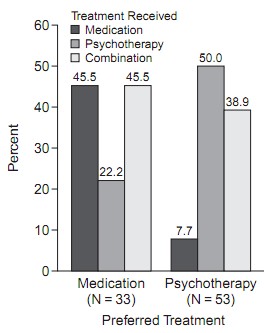
A paper in this month’s Psychotherapy and Psychosomatics by Mergl and colleagues shows that patient preference (that is, whether the patient prefers medications or psychotherapy) predicts how effective a treatment will be.  In their study, patients who expressed a preference for medications at the beginning of treatment had a better response to Zoloft than to group therapy, while patients who preferred therapy showed the exact opposite response.

In an even larger study published in 2009 by James Kocsis and colleagues at Weill-Cornell in New York (comparing nefazodone, an antidepressant, with a cognitive therapy approach called CBASP), a similar result was obtained:  patients with chronic major depression who entered the study expressing a preference for drug treatment had higher remission rates when receiving medication than when receiving psychotherapy, and vice versa.

The numbers were quite shocking:

Patients who preferred medication:

Treatment received Remission rate Avg. depression score (HAM-D) at end of study (high score = more depressed)
Meds 45.5% 11.6
Therapy 22.2% 21.0

Patients who preferred therapy:

Treatment received Remission rate Avg. depression score (HAM-D) at end of study
Meds 7.7% 18.3
Therapy 50.0% 12.1

(original HAM-D scores were approximately 26-27 for all patients, constituting major depression, and patients in this study had been depressed for over two years)

Thus, if a depressed patient wanted therapy but got medications instead, their chances of “remitting” (ie, having a fully therapeutic response to nefazodone) were less than 1 in 12.  But if they did get therapy, those chances improved to 1 in 2.  Interestingly, patients who preferred therapy and got combination treatment (meds and therapy) actually did worse than with therapy alone (remission rate was only 38.9%), leading the authors to conclude that “few patients who stated a preference for psychotherapy benefited much from the addition of medication.”

It’s not surprising, at first glance, that people who “get what they want” do better.  After all, a depressed patient who insists on taking meds probably won’t get much better if he’s dragged into psychotherapy against his will, and the patient who believes that a weekly session with a therapist is exactly what she needs, will probably have some resistance to just getting a pill.

But then again, isn’t depression supposed to be a hard-wired biological illness?  Shouldn’t a medication have a more profound effect, regardless of whether the patient “wants” it or not?

Apparently not.  The fact that people responded to the treatment they preferred means one of two things.  There may be two different types of depression, one that’s biological and one that’s more behavioral or “exogenous,” and people just happen to choose the appropriate treatment for their type due to some predisposition or innate tendency (self-knowledge?).  Alternatively, the “biological” basis of depression is not all it’s cracked up to be.

One question raised by these results is, why don’t we listen more to our patients and give them what they say they want?  If half the people who want therapy actually get better with therapy, doesn’t that make it hard to justify meds for this population?  Conversely, when we talk about “treatment-resistant depression,” or “depression that doesn’t respond to antidepressants alone,” could it be that the people who don’t respond to pills are simply those who would rather engage in psychotherapy instead?

I believe the implications of these findings may be significant.  For one thing, insurers are becoming less likely to pay for therapy, while they spend more and more money on antidepressant medications.  These studies say that this is exactly what we don’t want to do for a large number of patients (and these patients are easy to identify—they’re the ones who tell us they don’t want meds!).  Furthermore, trials of new antidepressant treatments should separate out the self-described “medication responders” and “therapy responders” and determine how each group responds.  [Note:  in the large STAR*D trial, which evaluated “switching” strategies, patients were given the opportunity to switch from meds to therapy or from one med to a different one of their choosing, but there was no group of patients who didn’t have the option to switch.]  If the “therapy responders” routinely fail to respond to drugs, we need to seriously revamp our biological theories of depression.  Its chemical basis may be something entirely different from how our current drugs are thought to work, or maybe depression isn’t “biological” at all in some people.  This will also keep us from wasting money and resources on treatments that are less likely to work.

While it’s often risky to ask a patient what he or she wants (and to give it to them), depression may be just the opportunity to engage the patient in a way that respects their desires.  These data show that the patient may know more than the doctor what “works” and what doesn’t, and maybe it’s time we pay closer attention.


How Lithium Works (Maybe)

February 17, 2011

“Half of what we have taught you is wrong.  Unfortunately, we don’t know which half.”

— attributed to a Harvard Medical School dean at commencement, sometime in the 20th century

The above, possibly apocryphal, statement is often invoked to illustrate how dynamic the field of medicine can be, and how what we thought we once knew beyond a shadow of a doubt, sometimes turns out to be dead wrong.  It’s also a celebration of scientific progress; as we revise our pathophysiological models, we can develop more targeted therapeutics.

In this regard, psychiatry is no different from any other field of medicine.  We don’t know (yet) what we don’t know, but once we do, our treatments will improve.  At the same time, we need to be careful how we use this new information, lest it give us a false sense that we “know” something we don’t.

I thought of this question when I encountered a headline earlier today at psychcentral.com“How Lithium Works Finally Explained.” Talk about a tantalizing headline!  First used clinically in the late 1800s (and later “rediscovered” in the 1940s), and still used extensively as a mood stabilizer in bipolar disorder and as adjunctive treatment for major depression, lithium is one of the most widely prescribed medications in all of medicine.  Many patients report a very good response to lithium, and its efficacy has not been surpassed by the multitude of other mood stabilizing agents introduced in the last 40 years.

But there’s just one problem.  Nobody really knows how lithium works.  It’s an ion (similar to sodium), so it doesn’t bind to a receptor or transporter, like most other psychiatric drugs.  It doesn’t seem to affect membrane potential (and therefore neuron excitability), and it doesn’t seem to target any particular region of the brain, much less those thought to be involved in mood disorders.  It may inhibit intracellular messengers (the phosphatidylinositol pathway) or it might inhibit cellular differentiation (via the Wnt signaling pathway).  Maybe it blocks sodium ion transport.  Maybe it interacts with nitric oxide.  No one knows.  And yet it works.

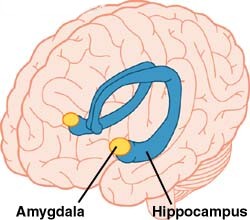
So it was with great interest that I read the original paper cited in the Psychcentral article.  It’s a “mega-analysis,” published in the February 15 issue of Biological Psychiatry, of 321 bipolar patients in 11 centers worldwide who underwent MRI scans and were compared to non-bipolar controls.  Half of the bipolar patients were taking lithium.  To summarize the results, patients taking lithium had larger hippocampal and amygdala volumes than those not taking lithium, and patients with a longer history of bipolar disorder had reduced cerebral volumes.

The data, then, seem to be consistent with the idea of lithium as having a “trophic” effect—i.e., as a promoter of neuronal growth, at least in some brain structures.  But that’s about all we can say.  Whether this has anything to do with intracellular signaling or the Wnt pathway, or with any known nerve growth factors, is beyond the scope of this study.

So despite the exciting headline claiming to identify the “mechanism of lithium,” this is simply an observation, much like the observation about how antipsychotics may decrease brain volumes, about which I wrote last week.  It suggests further research to understand lithium’s effect on these regions.  But it may not be clinically relevant.

Lithium is a widely used drug because it works.  Period.  These new data add to our knowledge about bipolar disorder, but to assume that they help us understand bipolar patients any better than we did before, is incorrect.  Moreover, it may lead us to draw false conclusions about our patients (i.e., “he’s not responding to lithium so his hippocampus must be atrophied”) or, worse, reject or disregard data that don’t fit with our hypothesis.  I’d much rather prescribe a drug because I have years of experience using it, and have heard hundreds of patients endorse its benefit, rather than adhere to an incorrect theory, even a theory with “face validity” like lithium promoting nerve cell growth and differentiation.  In fact it’s not too hard to find arguments against this theory:  for starters, consider lithium’s teratogenic effects during human embryonic development.

Anyone who wants an accurate explanation for how a psychiatric drug works is, unfortunately, out of luck.  The serotonin hypothesis is a perfect example:  SSRIs work in a lot of patients, and the serotonin hypothesis helps to guide treatment, but it might be absolutely incorrect.  How many alternate explanations have we ignored because we want to believe that our model must be right?

We can, and should, continue to use SSRIs to treat depression, and lithium to treat bipolar disorder.  But we should be aware that our explanations of their mechanisms are mere hypotheses—nothing more.  And, moreover, that these hypotheses may be contradicted or proven wrong.  Because we don’t know which half of our knowledge is the correct half.


The Placebo Effect: It Just Gets Better and Better

February 13, 2011

The placebo response is the bane of clinical research.  Placebos, by definition, are inert, inactive compounds that should have absolutely no effect on a patient’s symptoms, although they very frequently do.  Researchers compare new drugs to placebos so that any difference in outcome between drug and placebo can be attributed to the drug rather than to any unrelated factor.

In psychiatry, placebo effects are usually quite robust.  Trials of antidepressants, antianxiety medications, mood stabilizers, and other drugs typically show large placebo response rates.  A new paper by Bruce Kinon and his colleagues in this month’s Current Opinion in Psychiatry, however, reports that placebos are also show some improvement in schizophrenia.  Moreover, placebos seem to have become more effective over the last 20 years!

Now, if there’s any mental illness in which you would not expect to see a placebo response, its schizophrenia.  Other psychiatric disorders, one might argue, involve cognitions, beliefs, expectations, feelings, etc.—all of which could conceivably improve when a patient believes an intervention (yes, even a placebo pill) might make him feel better.  But schizophrenia, by definition, is characterized by a distorted sense of reality, impaired thought processes, an inability to grasp the differences between the external world and the contents of one’s mind, and, frequently, the presence of bizarre sensory phenomena that can only come from the aberrant firing of the schizophrenic’s neurons.  How could these symptoms, which almost surely arise from neurochemistry gone awry, respond to a sugar pill?

Yet respond they do.  And not only do subjects in clinical trials get better with placebo, but the placebo response has been steadily improving over the last 20 years!  Kinon and his colleagues summarized placebo response rates from various antipsychotic trials since 1993 and found a very clear and gradual improvement in scores over the last 15-20 years.

Very mysterious stuff.  Why would patients respond better to placebo today than in years past?  Well, as it turns out (and is explored in more detail in this article), the answer may lie not in the fact that schizophrenics are being magically cured by a placebo, but rather that they have greater expectations for improvement now than in the past (although this is hard to believe for schizophrenia), or that clinical researchers have greater incentives for including patients in trials and therefore inadequately screen their subjects.

In support of the latter argument, Kinon and his colleagues showed that in a recent antidepressant trial (in which some arbitrary minimum depression score was required for subjects to be included), researchers routinely rated their subjects as more depressed than the subjects rated themselves at the beginning of the trial—the “screening phase.”  Naturally, then, subjects showed greater improvement at the end of the trial, regardless of whether they received an antidepressant or placebo.

A more cynical argument for why antipsychotic drugs don’t “separate from placebo” is because they really aren’t that much better than placebo (for an excellent series of posts deconstructing the trials that led to FDA approval of Seroquel, and showing how results may have been “spun” in Seroquel’s favor, check out 1BoringOldMan).

This is an important topic that deserves much more attention.  Obviously, researchers and pharmaceutical companies want their drugs to look as good as possible, and want placebo responses to be nil (or worse than nil).  In fact, Kinon and his colleagues are all employees of Eli Lilly, manufacturer of Zyprexa and other drugs they’d like to bring to market, so they have a clear interest in this phenomenon.

Maybe researchers do “pad” their studies to include as many patients as they can, including some whose symptoms are not severe.  Maybe new antipsychotics aren’t as effective as we’d like to believe them to be.  Or maybe schizophrenics really do respond to a “placebo effect” the same way a depressed person might feel better simply by thinking they’re taking a drug that will help.  Each of these is a plausible explanation.

For me, however, a much bigger question arises: what exactly are we doing when we evaluate a schizophrenic patient and prescribe an antipsychotic?  When I see a patient whom I think may be psychotic, do I (unconsciously) ask questions that lead me to that diagnosis?  Do I look for symptoms that may not exist?  Does it make sense for me to prescribe an antipsychotic when a placebo might do just as well?  (See my previous post on the “conscious” placebo effect.)  If a patient “responds” to a drug, why am I (and the patient) so quick to attribute it to the effect of the medication?

I’m glad that pharmaceutical companies are paying attention to this issue and developing ways to tackle these questions.  Unfortunately, because their underlying goal is to make a drug that looks as different from placebo as possible (to satisfy the shareholders, you know) I question whether their solutions will be ideal.  As with everything in medicine, though, it’s the clinician’s responsibility to evaluate the studies critically—and to evaluate their own patients’ responses to treatment in an unbiased fashion—and not to give credit where credit isn’t due.


What Does a Diet Drug Have in Common With a Swiffer?

February 8, 2011

What does the new anti-obesity drug Contrave have in common with the Swiffer?

Yes, I’m talking about that Swiffer, the cleaning tool that is essentially a dry mop with disposable dusters that attach to a dispensible handle.

When the Swiffer was first introduced, it was a revolutionary product.  And it remains a top seller for Procter & Gamble, its manufacturer.  But in reality, it’s not exactly a revolutionary idea.  In fact, my mother, in fact (an expert cleaner in her own right, much to my childhood chagrin) used to remark that she could have become a millionaire if she had marketed her own idea for a “homemade Swiffer”:  wet paper towels or dryer sheets wrapped around a broom head.  The Swiffer is one of those miracles of “good design”— an idea that is elegant in its simplicity but surprisingly effective in its application, and I’m sure it has led thousands of housewives (okay, and househusbands, too) to lament, “why didn’t I think of that?”

Enter Contrave.  What exactly is Contrave?  It’s a weight loss drug being developed by Orexigen Pharmaceuticals, Inc.  It’s not available yet, but you may have read about it in the business pages a few weeks ago, when Orexigen’s stock price (symbol: OREX) took a 72% nose dive in a single day after the FDA rejected it, recommending further study of the drug to rule out cardiac toxicity.

Like the Swiffer, Contrave is nothing terribly new; it’s a re-packaged “combination drug” consisting of two commonly used medications that psychiatrists and other doctors have been prescribing for years:  bupropion and naltrexone.  Bupropion (more commonly known as Wellbutrin or Zyban) is frequently used for the treatment of depression (and has been shown to cause some weight loss on its own).  Naltrexone (ReVia or Vivitrol) is an opiate antagonist and has been used in the treatment of alcoholism, opiate dependence, and impulse-control disorders.

In a clincial trial published last year, the combination of 360 mg bupropion (a respectable dose for depression, although not a dose most doctors would start with, right out of the gate) and either 16 or 32 mg naltrexone (a slightly lower dose than we use in alcohol dependence), was associated with an average 5.0% or 6.1% weight loss, respectively, over a one-year period (vs. 1.3% in the placebo group).  A related study, whose results were submitted for FDA approval, used similar doses and found that half of the patients taking Contrave lost >5% of their body weight.

So here we have a novel agent that shows some efficacy in a notoriously hard-to-treat condition, but which is not really a novel agent at all.  Just like the Swiffer is a “gee-whiz” product that is clever, remarkably useful, but conceptually quite simple.

But this is where (in my opinion) the similarities should end.  Very few people would blame Procter & Gamble for developing a product that fills a niche but is really an overpriced combination of some readily available (and much cheaper) materials.  Frugal consumers can pass on the Swiffer and make their own, while plenty of others are willing to pay the premium for the convenience of the name-brand product.  And I think we’d all agree that people can spend their money on household cleaning supplies in whatever way they see fit.

But in medicine things are different.  When a product receives FDA approval for a given indication (especially a disease as prevalent as obesity), it’s an automatic market; plenty of doctors will prescribe it, and insurance companies & public insurers like Medicaid will cover it.  Simultaneously, you can bet that a well-orchestrated promotional campaign will rally millions of customers to “ask their doctor” about this “brand new diet drug” they saw on TV.  And Orexigen will most certainly charge a hefty premium over the component costs of bupropion and naltrexone alone, to recover the costs of clinical trials and to return a profit to its shareholders.  To be sure, as doctors learn that Contrave is actually a combo of two cheaper drugs they can easily prescribe, they might prescribe less of it, but not before a huge market is created and exploited.

Ingenuity is a wonderful thing, especially when it’s brought to bear on problems that are notoriously difficult to solve, whether it’s the obesity epidemic or that mess on your kitchen floor.  However, when a manufacturer repackages old products under a new name and charges a hefty premium for it, we need to be aware of this, and make decisions accordingly.  While most consumers don’t mind paying an extra few bucks for the convenience of a Swiffer, we should think twice about allowing our cash-strapped medical system to shell out the billions for a “blockbuster” drug like Contrave.


Lessons of Rebecca Riley

February 2, 2011

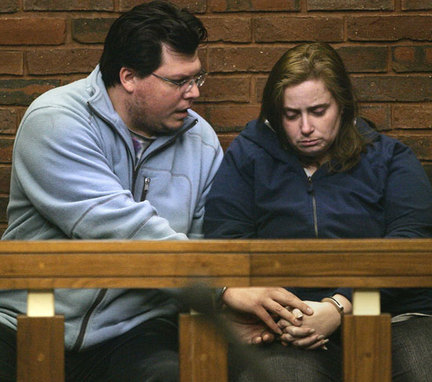
I’ve been following the Rebecca Riley case in Massachusetts, although not as closely as I would like to, since I find the details so incredibly disturbing.  For those of you who aren’t familiar with it, four year-old Rebecca died in 2006 after an overdose of the psychotropic medications clonidine, Depakote, and Seroquel.  Her parents were convicted of murder in 2010 even though they argued that they were simply “following the instructions” of Rebecca’s child psychiatrist, Dr Kiyoko Kifuji of Tufts Medical Center.  Dr Kifuji had diagnosed Rebecca with bipolar disorder and prescribed three powerful medications to her, starting at the age of 2.

It has also come to light that Rebecca’s parents had exploited the social service system to obtain federal disability benefits for their three children– Rebecca and two older siblings, who were also diagnosed with bipolar disorder and ADHD by Dr Kifuji.  Also, Dr Kifuji’s medical license was suspended for two years after Rebecca’s death, although she eventually returned to practice medicine at Tufts, where she still sees patients.  Finally, Tufts settled a malpractice suit with the family last week for $2.5 million.

Many news stories disturb me, but this one makes me particularly angry, because all parties share part of the blame.  Obviously, I did not evaluate Rebecca myself (and, in the interest of full disclosure, I am not a child psychiatrist, nor have I even raised a two-year-old of my own), but the facts of the case, as I understand them, fill me with contempt for just about everyone involved.  Everyone that is, except for Rebecca.

The objects of my rage?  Let’s go down my list, one at a time:

  • Dr Kiyoko Kifuji – Even if we grant the possibility that bipolar disorder can be diagnosed in a two year-old (a questionable premise, even according to the experts), the evidence suggests that Dr Kifuji permitted Rebecca’s parents to give the medications as they saw fit (and agreed with their decisions to increase doses), authorized prescriptions over the phone without evaluating Rebecca, and was cautioned by pharmacies that Rebecca’s parents were going through meds more quickly than expected.  Social workers and a school nurse also alerted Dr Kifuji to the fact that Rebecca seemed oversedated and “like a floppy doll,” but Dr Kifuji allegedly made no adjustments to Rebecca’s treatment plan.
  • Michael and Carolyn Riley (Rebecca’s parents) – Seven abuse and neglect complaints were filed with the Massachusetts Dept of Children and Families, starting in 2002, alleging that the Rileys seemed unable to care for their children; apparently they, too, were also taking doses of medications that, at times, impaired their judgment.  Furthermore, it has come to light that everyone in the Riley family (except Rebecca) had applied for, and received, federal disability payments, in what appears to be a deliberate attempt to defraud the system to earn extra income.  They had filed an application for Rebecca, which was denied, but the Rileys appealed the decision.  However, after Rebecca’s death, in a jailhouse interview in September 2007, Carolyn Riley confessed to Katie Couric that she was not sure whether Rebecca had bipolar disorder after all: “maybe she was just hyper for her age.”
  • Massachusetts Department of Children and Families– While not directly responsible for Rebecca’s death, the warning signs were clearly visible that the Rileys were unfit to care for their children, including the abuse and neglect complaints noted above, as well as specific complaints from Rebecca’s therapist that, on a home visit, Carolyn Riley seemed “drugged and unable to care for [her] children.”  Agencies like this are incredibly overburdened and underfunded, but when they drop the ball, as they did in this case, lives may be at stake.
  • The psychiatric profession – As I’ve written on this blog, we as a discipline have not only expanded diagnostic criteria for mental illness (and are continuing to do so), but sometimes err on the side of over-diagnosis and over-treatment, rather than exploring alternate explanations for behavior or less potent treatment options.  One may argue that Dr Kifuji was practicing within the accepted standard of care.  Because I am not a child psychiatrist, I cannot comment on that, but there has been a 40-fold increase in diagnosis of childhood bipolar disorer from 1994 to 2003, which only a few in our profession have questioned or challenged.
  • The pharmaceutical industry – Drug companies are easy targets for frustration and rage, but in this case it could be argued that it was the inappropriate use of three commonly used (and frequently effective) medications which led to Rebecca’s death.  Two of the three medications she was taking (clonidine and valproic acid) are off-patent, so no one can accuse a drug company of “pushing” a medication on Rebecca for the sake of profit.  Nevertheless, efforts by Big Pharma to promote and expand the use of their medications can unfortunately bias some providers to overuse their agents, and the promotion of drugs while downplaying the risk of adverse effects is inexcusable.  (Even so, in my opinion, we doctors need to be held responsible for what we prescribe and why.)
  • Massachusetts Board of Registration of Medicine – Dr Kifuji entered a “voluntary agreement” to stop practicing psychiatry from February 2007 to September 2009.  The Board conducted an investigation into the case but “closed the complaint against Dr Kifuji without discipline.”  She has since returned to practice.  In my experience, I have seen state medical boards revoke licenses from doctors whose misbehaviors were not nearly as (allegedly) egregious as Dr Kifuji’s, or which involved only their personal lives and not patient care.  When I see the reports of this case and recognize that Dr Kifuji still practices psychiatry (in the same location and with the same patient population) I am concerned about the double standard being practiced by licensing bodies.
  • Tufts Medical Center – Obviously, Kifuji’s care was provided by an institution that also shares some responsibility for the ethical and beneficent provision of medical care. At the same time, it is shocking that Kifuji has retained her faculty position at Tufts.  Again, in my experience, hospitals and other institutions tend to be overly conservative when there is even the question of inappropriate behavior by one of their providers, if only to maintain good public relations.  Perhaps her employment will be terminated or limited now that a malpractice settlement has been reached, but it does strike me as one of those cases in which I see nothing that Tufts could gain by Dr Kifuji’s continued employment.
  • Malpractice Attorneys – Another easy (but valid) target.  Even assuming that malpractice was committed and the charges were valid, the fear of cases of this magnitude may make doctors less likely to treat the cases which actually do require aggressive care (and also contributes to defensive medicine, resulting in greater health care costs).  One might ask, however, whether the case, brought on behalf of Rebecca’s estate, had any merit, since her parents had already been convicted of her murder.  But as with most things in life, where there’s an opportunity for a payout, there are those who will spring into action:  A settlement of $2.5 million at 35% contingency fee, plus other expenses = $875K +.  And maybe the lawyer will be the guardian of funds, or set up a trust for Rebecca’s siblings, for an additional fee.  As a doctor wrote on a different website, “Three years of law school suddenly sounds like a better investment than medical school, internship, residency, and fellowship training.”

So many opportunities for Rebecca’s life to have turned out differently.  And so much blame to go around.  Unfortunately, the only one without any culpability at all is Rebecca herself.